
Imposible ?
The house, in a few honest pages.
Where Elenvelle began, how each candle is made, and the small legends behind every scent. Written from the bench, not the marketing room.
A candle on the kitchen table.
Elenvelle began on a kitchen table in Holten — one pan, one thermometer, one wick. No business plan, no branding, only the idea that a candle can be more than scent: it can change a room without saying anything.
The first batch was twelve glasses. Eight poured too warm, three cracked while cooling, and one — exactly one — burned the way it was supposed to. That one became the benchmark. We wrote it on a slip of paper and pinned it above the bench: "this, or not at all."

Slow light is a ritual.
We pour in small batches, by hand, in EU-grown rapeseed wax without palm. Fragrances come from Grasse — a four-year waiting list with some perfumers — and are dosed by weight, never by eye.
Every candle rests for 72 hours before the wick is trimmed. This is not marketing language: it is chemistry. Wax that cools too fast cracks under the flame, and rushed fragrances come on too hard in the first twenty minutes. Waiting makes it softer.
We believe things made slowly are used slowly. An Elenvelle is not an impulse candle — it is a memory, a marker, an evening.

One pair of hands, one signature.
The atelier runs on one person — Elen V. — and a small team of two. I dip every wick, I weigh every fragrance, I write each note that comes in the box. When you hold an Elenvelle, that is literally my handwriting on the label.
That signature is not decorative. It is a promise: if something is wrong, you know exactly who hears about it. Write to the atelier and you reach me, not a customer-service script.
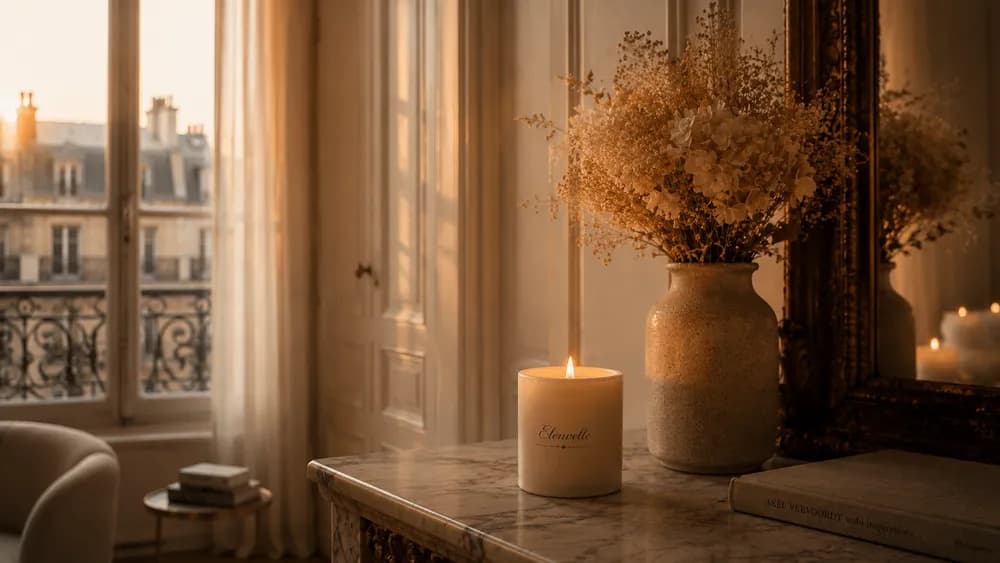
Some afternoons ask only for light.
Legends · scent by scent
A small myth for every candle.
Each scent in the atelier carries a small story — a memory, a place, a moment that the wax was poured to hold. Here are six of them.
First snow
Lumière Douce
There is a brief moment in November, just after the first snow, when the light itself seems softer. Lumière Douce is poured to hold that light. Bergamot for the sharp cold, cedar and iris for the silence, sandalwood and amber for the room you return to.
Discover the candle →Cut grass
Foin Coupé
My grandfather mowed the grass on Sunday mornings. The smell that rose — half grass, half hay, with a small bitter undertone of green stems — became, for me, the smell of home. Foin Coupé is the candle version: mint and hay on top, tonka and vetiver at the heart, moss at the base.
Discover the candle →Silent Sunday
Nuit Blanche
A white night is not a sleepless night — it is a night you stay awake on purpose. A book, a cup of tea, a candle that does not want you to fall asleep. Pink pepper opens, rose and saffron keep you company, amber and musk wait until you close the book.
Discover the candle →Smoke & salt
Sel Fumé
Sel Fumé carries two places inside it: a Brittany beach in October and a Scottish kitchen in December. Sea salt and smoke — not the heavy barbecue kind, but the fine smoke of a fire just put out — woven with a shadow of leather. A candle to burn when it rains.
Discover the candle →Light rain
Pluie Fine
Petrichor — the word for the smell of rain on dry earth — has one problem: almost no candle ever truly captures it. We worked on it for three years. Pluie Fine smells of stone, of just-wet moss, of the short instant after a summer shower when everything breathes again.
Discover the candle →Dark velvet
Velours Noir
For the evenings you do not want to talk. Velours Noir is the heaviest scent in the atelier — aged wood, tobacco leaf, a thread of vanilla that only appears in the final third of the burn. Not for work, not for the kitchen. Only for the chair you eventually settle into.
Discover the candle →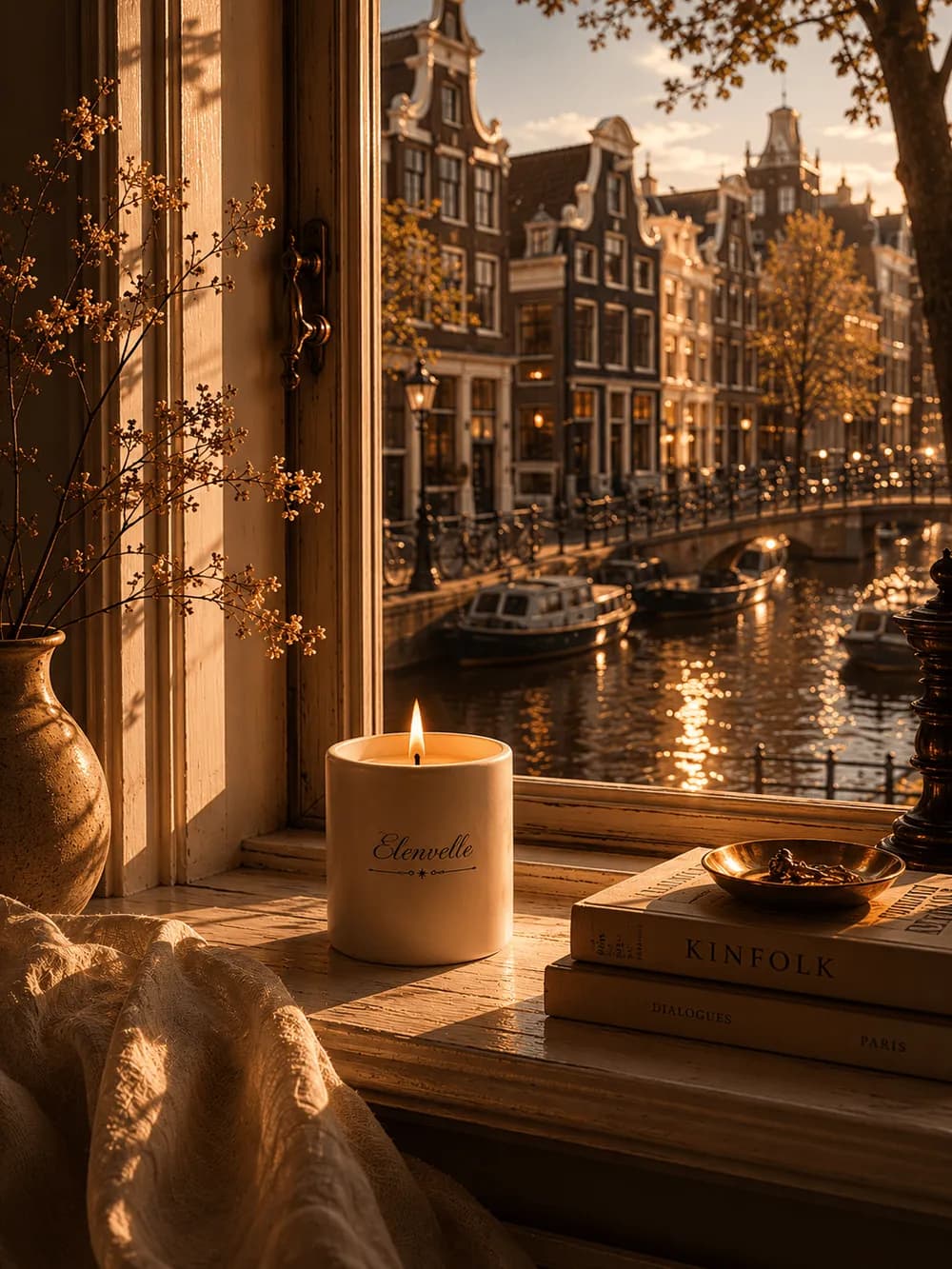
A window, a canal, the hour before dark.
Inside the atelier
From the bench, not a studio.
Scroll →
 01
01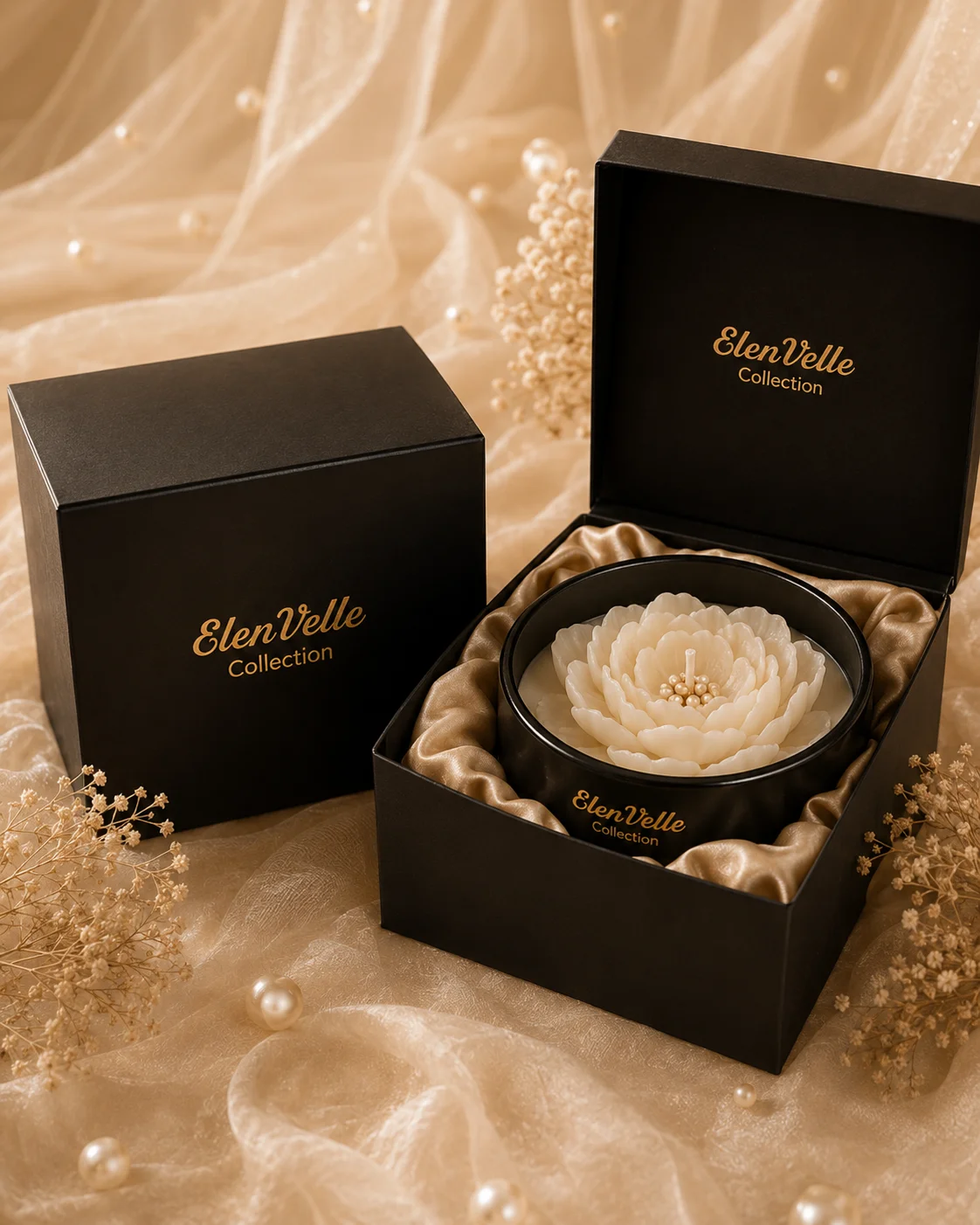 02
02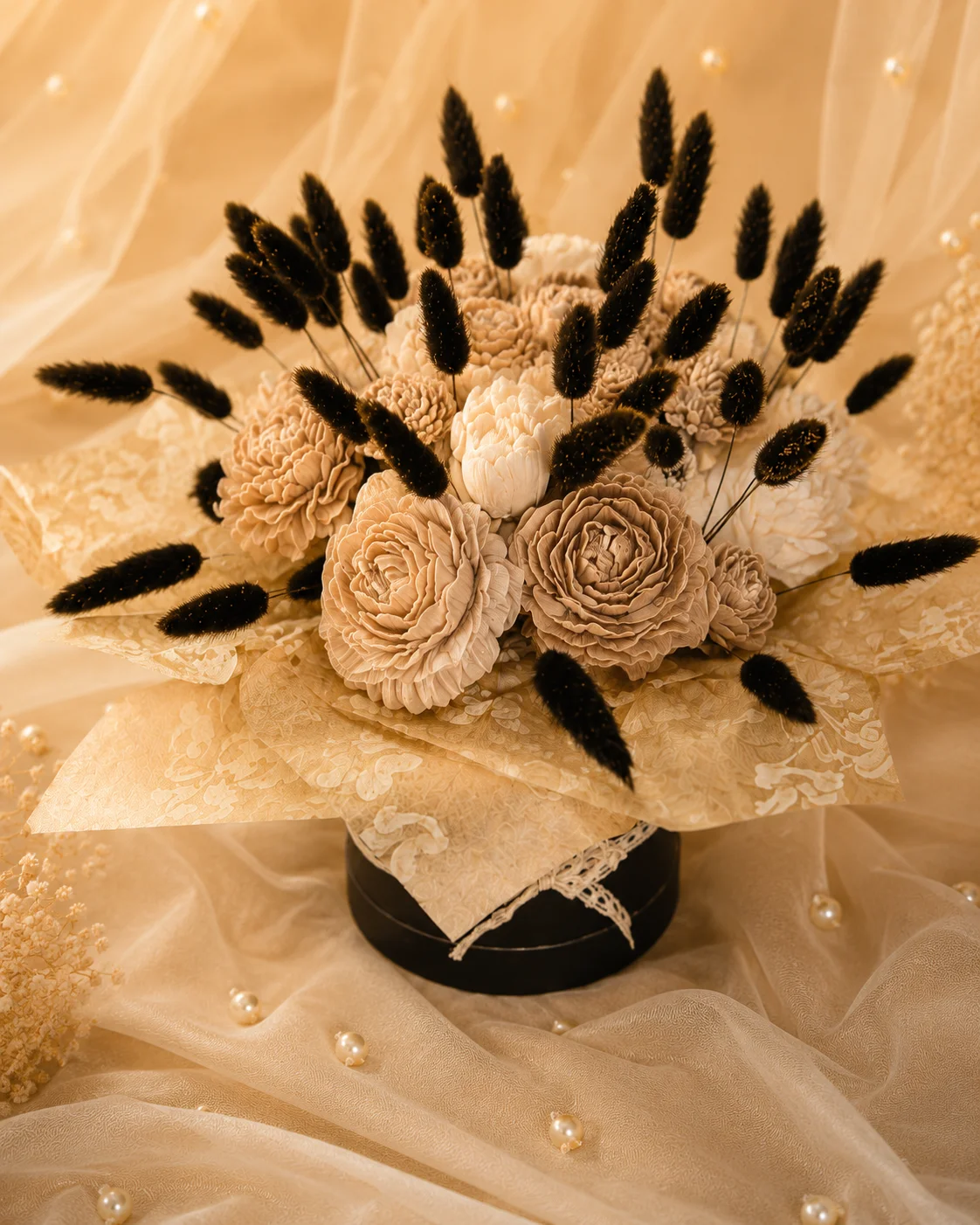 03
03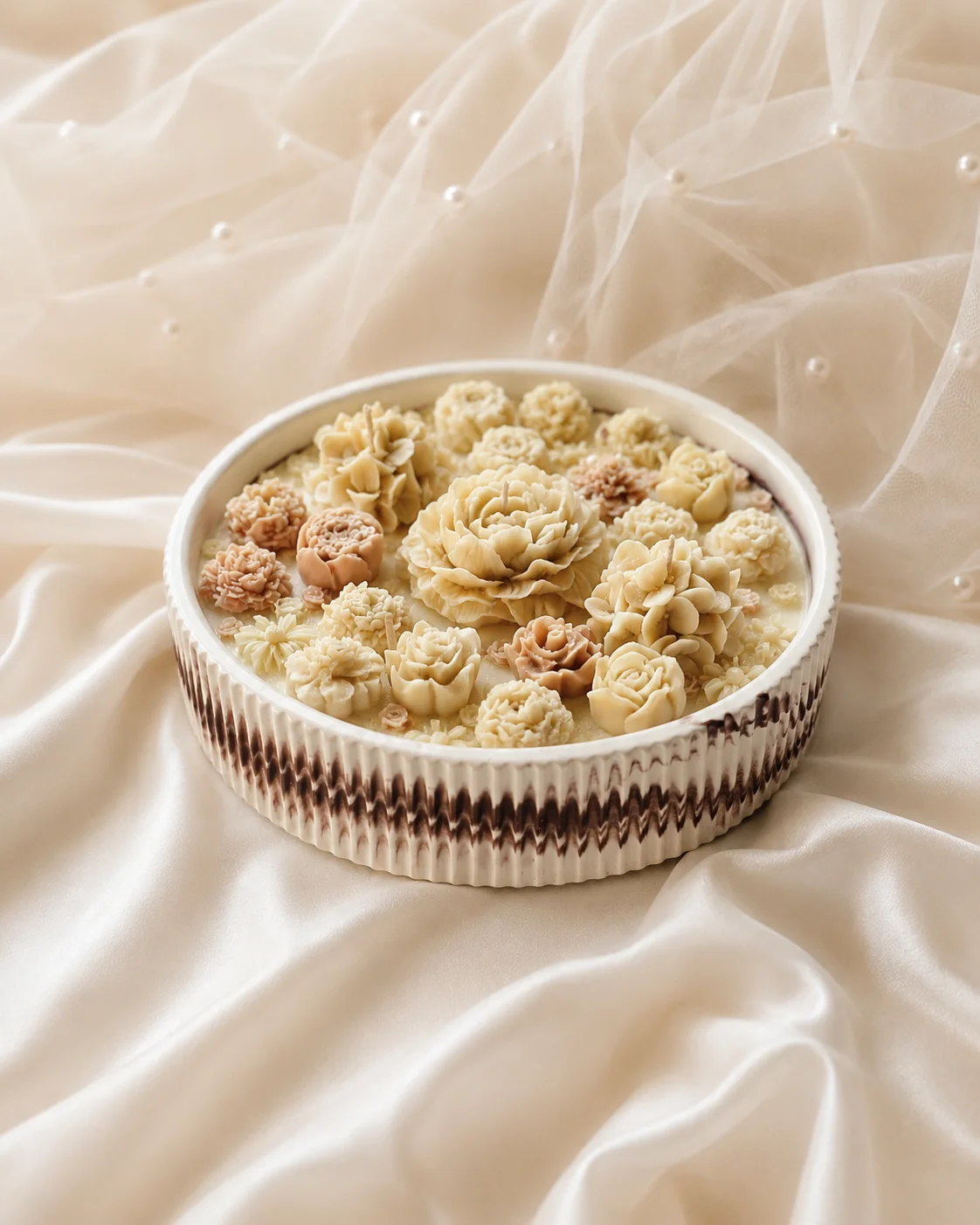 04
04Want a candle in your hand?